Block Loop Shooter
- 4.5
- Rating
- 1.00M
- Installs
- Free
- Price

 Analysis by App-foxy
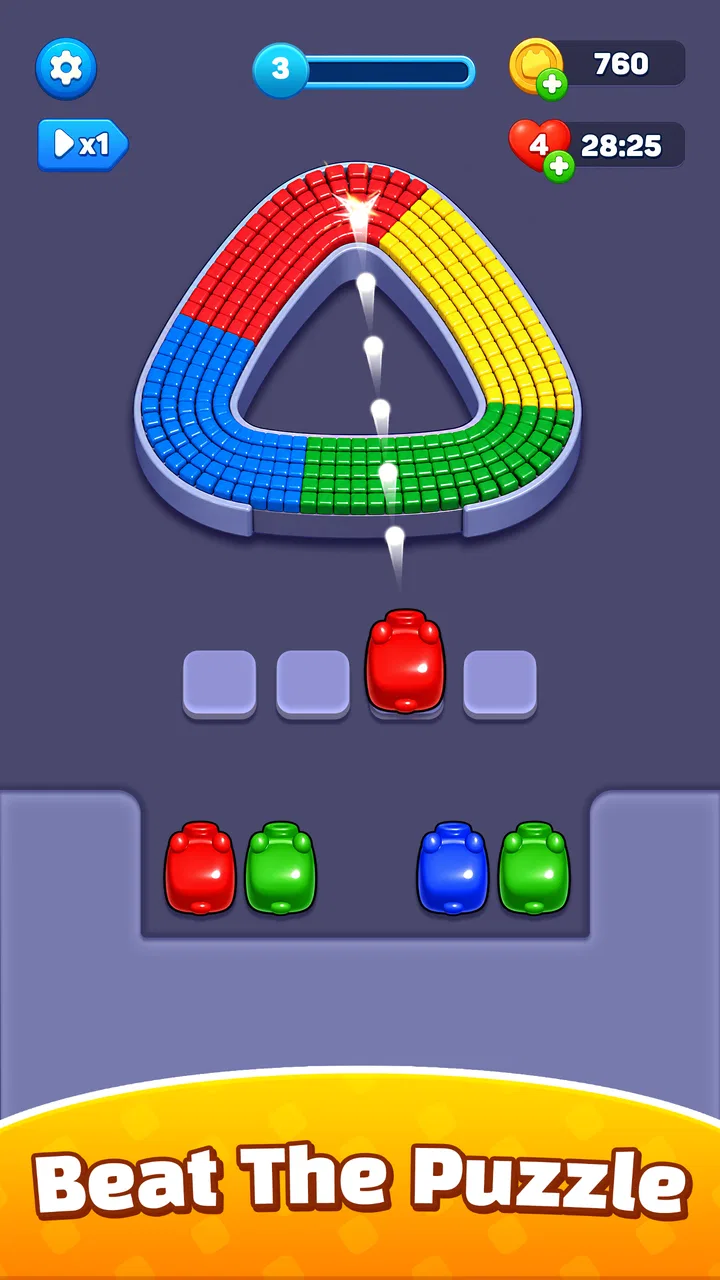
I approached Flow Blast Shooter as a quick puzzle game rather than something meant to replace a long-form strategy title. Its central idea is easy to understand: manage the movement of a flowing line, match shots by color, and clear the path before the conveyor-like stream becomes difficult to control. That sounds simple, but the appeal comes from making small decisions under pressure. A shot that looks harmless can affect the next few moves, so the game rewards attention more than random tapping.
After spending time with it, I found the strongest part of the experience is the compact decision-making. A round can fit into a short break, yet it still gives me something to think about. The game is free to play, rated for Everyone, and works on devices running Android 7.0 or later. That makes it a fairly approachable choice for families, casual players, and anyone looking for a lightweight color-matching puzzle instead of a demanding action game.
What makes the puzzle enjoyable, and where players can get stuck
The developer, kiwilab, has built the game around a visual problem that becomes harder to read as the flow develops. I am not simply looking for the next matching color. I also have to consider where the stream is moving, which color may become useful next, and whether clearing one section will leave an awkward gap or a better opportunity. That extra layer is what keeps the basic shooting mechanic from feeling completely automatic.
You May Also Like

 Blood Strike: 2.5 Anniversary
Blood Strike’s Loadouts Turn Every Drop Into a Tactical Gamble
A close look at Blood Strike’s custom loadouts: how fast access to signature weapons reshapes its battle royale rhythm, rewards preparation, and narrows the gap between fights.

 Pandora - Music & Podcasts
Pandora’s Music Is Easy to Start, but Harder to Recover
Pandora’s strength is its low-effort path from a seed to a station. Its weak spot is how much confidence it asks you to place in connection, setup, and quiet recovery.

 8 Ball Pool
 Is Built on Rivalries, Rematches, and Routine
A close look at the rivalries, rematches, shared routines, and unanswered safety questions that turn a quick pool match into a persistent mobile community.

 Samsung Music
’s Quiet Strength Is Playing What You Already Own
Its reach comes less from spectacle than from dependable access to a personal library. That simplicity is both the app’s strongest retention engine and its ceiling.

 AccuWeather: Weather Radar
AccuWeather Review: A Quick, Clear Forecast for Everyday Decisions
For everyday plans, the best forecast is the one you can understand quickly. AccuWeather makes rain timing, radar, and local conditions easy to act on, with a few trade-offs.

 Hill Climb Racing
Why Hill Climb Racing Still Turns Crashes Into One More Run
A tiny car, a bumpy hill and one more upgrade: Hill Climb Racing keeps resurfacing because its simple chaos makes every near-miss feel personal.
More From Our News Desk



The first few sessions are likely to feel approachable because the objective is visible. The challenge is not learning a complicated control scheme; it is learning to pause mentally before firing. When the board is moving, the most obvious target is not always the best target. I found it helpful to identify a short sequence of possible matches instead of treating every shot as an isolated action.
One common place to get stuck is reacting too quickly to a color that is currently available. If I fire immediately, I may remove a convenient match but leave the next section arranged badly. A better habit is to scan the visible flow from the shooting point outward, then decide whether the current shot improves the whole route. This is especially useful when several colors are close together and the conveyor movement is making the board look busier than it really is.
Another source of friction is visual overload. The game’s idea depends on recognizing colors quickly, so a player who focuses only on the nearest object can lose track of the wider pattern. I had better results when I used a steady rhythm: inspect, choose, fire, and inspect again. That rhythm is more reliable than tapping rapidly whenever a matching color appears.
The most important adjustment is to treat every shot as part of a sequence, not as a single point-scoring action. This does not require advanced puzzle knowledge, but it changes the way the game feels. Instead of asking, “Can I hit this color?” I ask, “What will the flow look like after I hit it?” That question is simple and surprisingly useful.
Why the opening minutes can feel different from later play
At the beginning, the game’s concept is immediately readable. Later, the pressure comes from managing space and timing together. Even without adding a complicated control system, a moving flow creates a natural trade-off: waiting may reveal a better match, but waiting too long can make the board harder to manage. That tension gives the puzzle its character.
I would not describe this as a slow, meditative matching game. It has a more active feel because the arrangement is not completely static. Players who enjoy watching a board change and making decisions on the fly will probably settle into it quickly. Players who prefer unlimited time to plan every move may find the moving flow stressful rather than satisfying.
A practical tip is to avoid judging a round by one missed shot. When I made a poor choice, restarting my thinking was more helpful than trying to compensate with frantic taps. The useful recovery question is: which color or position is now most likely to restore control? That approach prevents one mistake from turning into a chain of rushed decisions.
Setup checks before blaming the game
Because this is a mobile puzzle game, the first setup question is compatibility. The listed minimum is Android 7.0, so an older device may be the reason for installation trouble or an unavailable download. On a supported phone, I would still make sure the operating system is reasonably up to date and that the device has enough free storage for a normal game installation. These are basic checks, but they solve more problems than repeatedly tapping the install button.
The game is free to download, with optional in-app purchases priced from $0.99 to $4.99 per item. That matters if the phone is shared with a child or if you prefer a completely purchase-free setup. I would check the device’s purchase protections before handing it over, especially because the Everyone age rating describes the intended content audience, not the purchasing habits of the person using the phone.
On a family device, I would also open the game once before a child plays it and confirm that the controls are comfortable on that particular screen. A puzzle based on quick color recognition can feel very different on a compact phone compared with a larger display. This is not a performance benchmark; it is simply a matter of whether the moving objects remain easy to distinguish without covering the play area with a finger.
If the game appears stuck during installation, I would first check the connection, close other downloads, and restart the store application. If it installs but will not open, a full device restart is a sensible next step. I would avoid immediately deleting other apps or changing advanced system settings. Simple recovery steps are safer and usually enough to separate a temporary store problem from a genuine compatibility issue.
The current version is 2.3.7, so I would also check whether the installed copy is current when troubleshooting unusual behavior. An older installation can behave differently from the version currently distributed. Updating through the normal app store is preferable to searching for unofficial packages, which can introduce risks unrelated to the game itself.
Small habits that make the first session smoother
I recommend beginning with sound at a comfortable level and brightness high enough to distinguish the colors clearly. Neither setting changes the puzzle rules, but both affect how quickly I can read the moving arrangement. If the phone is in battery-saving mode or already handling many background tasks, closing unnecessary apps can make the whole session feel less interrupted.
It is also worth starting with a short session rather than assuming the game needs a long commitment. The best way to judge it is to play several rounds while paying attention to whether the flow-based pressure feels engaging or irritating. If the basic color-and-conveyor relationship does not appeal during that first test, extra play is unlikely to transform it into a different kind of puzzle.
For someone using an older supported phone, I would keep expectations realistic. Meeting the minimum operating system requirement does not guarantee the same smoothness as a newer device. If taps feel delayed, I would first close background apps, let the phone cool down, and test again before deciding that the controls are poor. Heat, low battery, and general system load can affect any fast mobile interaction.
Recovering a session when the flow goes wrong
The most useful recovery method is to slow down the decision process without waiting so long that the stream becomes unmanageable. I found that taking a brief visual inventory after each shot works better than trying to remember the entire board. Look for the next dependable color, identify whether the current path is becoming crowded, and then choose the shot that gives the clearest follow-up.
When a round starts to unravel, I would not keep firing simply because a color is available. That is the puzzle equivalent of digging a deeper hole. Instead, I would look for a move that reduces uncertainty. A shot that leaves a more readable arrangement can be better than one that appears to clear more immediately. This is one of the game’s less obvious lessons: visible progress and useful progress are not always identical.
Another good workflow is to separate recognition from action. First identify the colors and the direction of movement. Then select the target. Only after that should you tap. This small pause helps prevent accidental shots, particularly when the board is changing while I am still deciding. It also makes the game more comfortable for players who are quick to notice patterns but tend to act before confirming them.
If the controls stop responding, I would distinguish between a gameplay mistake and a technical interruption. Try one deliberate tap, then check whether the device itself is responding normally. If other apps are also slow, the issue may be the phone rather than Flow Blast Shooter. Closing the game and reopening it is a reasonable general recovery step, but I would avoid repeatedly force-stopping it during an active round if preserving the current session matters to me.
For connection-related concerns, I would test the game in the same environment where other ordinary apps work reliably. If the puzzle is playable but a store action or update is delayed, that points toward the connection or store process rather than the core activity. Restarting the connection and trying again later is safer than assuming the game has lost progress or that the device needs a full reset.
How to use short breaks without making the game frustrating
Flow Blast Shooter fits naturally into a waiting-room break, a commute pause, or a few minutes after finishing a task. My advice is to begin a round only when I can give it enough attention to read the moving path. It may be free and easy to open, but the active flow means it is not ideal when I am constantly switching between the puzzle and another task.
For a short session, I would focus on one skill rather than chasing a perfect result. For example, I might spend a few rounds practicing delayed shots, then another session looking for better follow-up positions. This turns casual play into a small learning loop and makes mistakes feel informative instead of merely annoying.
Parents considering it for a child should watch how the child responds to the moving pressure. The Everyone rating makes it broadly suitable from a content perspective, but suitability also depends on temperament. A child who enjoys color recognition and quick choices may find it rewarding. A child who becomes upset when a board changes before they can plan may prefer a slower puzzle with more time between moves.
When the app is not the cause of the problem
It is easy to blame a puzzle game when a round feels unfair, but several frustrations can come from the playing conditions. Glare can make colors harder to separate. A dirty or wet screen can affect tapping. Notifications can interrupt concentration at exactly the wrong moment. Before concluding that the game is poorly responsive, I would remove those distractions and try again under normal indoor lighting.
Color perception is another practical consideration. Since the game depends on matching by color, anyone who has difficulty distinguishing certain shades may find the core task less comfortable. A larger display, higher brightness, or a different viewing angle may help, but those adjustments cannot change the fundamental design. If color matching itself is tiring, a symbol-based or number-based puzzle would be a better alternative.
Device performance can also create misleading impressions. If the phone is nearly full, overheating, or running many demanding apps, the game may appear less responsive than it is under ordinary conditions. I would test after closing background applications and allowing the device to cool. If only this game continues to misbehave while everything else works normally, then reinstalling through the official store becomes a more reasonable troubleshooting step.
Purchase prompts, where relevant to the device setup, should be treated separately from the puzzle controls. The game costs nothing to download, but optional items can add spending. If I want a strictly no-purchase experience, I would secure the account before playing rather than relying on memory in the middle of a session. This is especially important on shared phones, where the person playing may not be the person managing the account.
There is also a difference between a design limitation and a fault. The moving flow is central to the game, so a player who wants a calm, static matching board may experience normal gameplay as unnecessary pressure. In that situation, switching to a traditional match-three or turn-based puzzle would be a better choice. Flow Blast Shooter is most convincing when its movement is part of the appeal, not something the player is trying to ignore.
Who should choose it over familiar puzzle alternatives
I would recommend this game to someone who likes color matching but wants more urgency than a standard static board provides. It is a good fit for short sessions, especially when I want a puzzle that can be understood quickly but still rewards better timing. The combination of shooting and managing a moving stream gives it a more active identity than ordinary tile swapping.
It is less suitable for players who want a deep story, a large strategic campaign, or a completely relaxed pace. It also may not be the best option for someone who dislikes repeating a compact mechanic while improving through practice. The game’s appeal is concentrated in its flow-control puzzle, so expectations matter. It is not trying to be a role-playing game, an arcade shooter with complex action, or a long narrative experience.
Compared with familiar match-three games, the key trade-off is control versus movement. Traditional match-three boards usually let me examine a stable arrangement and plan a swap. Here, the flow creates more urgency and makes timing part of the decision. Compared with marble-shooter puzzles, it shares the pleasure of color-based aiming but places more emphasis on managing what happens along a moving route. Players who enjoy both styles may find the combination refreshing, while specialists in either style may notice that it does not go as deep as their favorite alternative.
The public response suggests a modest but established audience: the game has a 4.1 average from over four hundred ratings and has passed one hundred thousand installs. I would read that as evidence that the basic idea is connecting with players, not as a guarantee that every player will enjoy the pacing. The smaller number of written reviews means I would rely more on my own first sessions than on a few enthusiastic or critical comments.
For me, the strongest use case is a person who wants a free puzzle for brief, focused breaks and enjoys learning a pattern through repetition. The weakest use case is someone searching for a quiet game to play while distracted, because the moving flow rewards attention. That distinction is more useful than simply calling it easy or difficult.
My practical verdict after testing the full experience
Flow Blast Shooter has a clear identity and does not need a complicated premise to be enjoyable. Its color-based shooting becomes more interesting when the conveyor-like movement forces me to think about the next position rather than only the current match. I appreciated that the game can be picked up quickly, yet it still gives careful players room to improve their reading and timing.
The main limitation is equally clear: the central mechanic may become repetitive for anyone who needs constant variety. The game also demands more concentration than its simple presentation suggests. A rushed tap, a poor screen view, or a distracted session can make the experience feel harsher than it probably is. That is not a reason to reject it, but it is a reason to choose the right moment to play.
My final advice is to install it if you enjoy compact puzzles with moving targets and want something that works well in short bursts. Check that the device meets Android 7.0, protect purchases if the phone is shared, and give the first rounds your full attention before judging the controls. If you prefer static planning, story-driven progression, or a puzzle that remains completely calm, another option will suit you better.
For the right player, Flow Blast Shooter is a pleasant free puzzle built around one focused idea. It is not an all-purpose mobile game, and it does not need to be. I would recommend it to a friend who likes color matching, quick decisions, and the satisfaction of recovering a messy board through better choices. The developer kiwilab keeps the concept approachable, while the moving flow supplies enough pressure to make each successful sequence feel earned.
FAQs for Block Loop Shooter
01What is Flow Blast Shooter?
Flow Blast Shooter is a dynamic action game available on Android and iOS platforms. It combines fast-paced shooting mechanics with strategic elements, challenging players to navigate through increasingly difficult levels while upgrading their weapons and skills. Its vibrant graphics and engaging gameplay make it a must-try for fans of the genre.
02Is Flow Blast Shooter free to play?
Yes, Flow Blast Shooter is free to download and play. However, it contains in-app purchases that allow players to buy upgrades, skins, and other enhancements. While these purchases can enhance the experience, they are not necessary to enjoy the game's full content.
03What are the system requirements for Flow Blast Shooter?
To run Flow Blast Shooter smoothly, Android users need a device with Android 5.0 or higher, and iOS users should have iOS 11.0 or later. The game is optimized for both smartphones and tablets, but a device with at least 2GB of RAM is recommended for the best experience.
04Does Flow Blast Shooter require an internet connection?
Flow Blast Shooter can be played offline, allowing users to enjoy the game without an active internet connection. However, some features, such as leaderboards and certain in-app purchases, will require connectivity to access and update.
05Are there any ads in Flow Blast Shooter?
Flow Blast Shooter includes ads, which help support the free-to-play model. Ads typically appear between levels or during certain transitions. Users have the option to remove ads through an in-app purchase, providing an uninterrupted gaming experience.
Pros
- Intuitive controls enhance gameplay.
- Vibrant graphics keep players engaged.
- Multiple levels offer varied challenges.
- Regular updates bring new features.
- Offline mode available for on-the-go play.
Cons
- In-app purchases can be pricey.
- Occasional ads disrupt gameplay.
- Limited customization options.
- Initial load time is a bit slow.
- Requires frequent updates for new levels.

Block Loop Shooter
Gallery